Africa
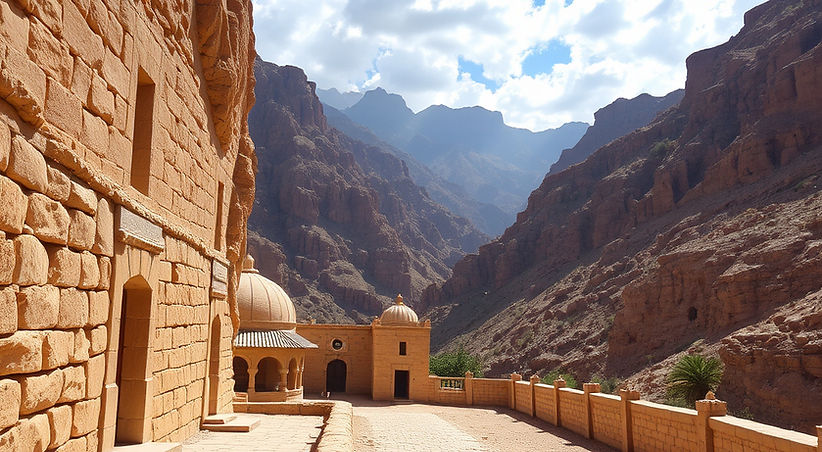
Saint Catherine's Monastery
This monastery used to house hundreds of bibles (scrolls) and holy writings by saints representing Africa and Asia. Some have been taken within the last 200 years by European and American and west Asian organizations such as The British Library, Imperial Russian Government, Library of Congress, National Library of Israel, EMEL (UCLA), Ligatus Research Centre (University of the Arts London). One of hundreds of examples of early Christian collection of scrolls. In general monks between Africa and Asia transcribed and maintained Jewish and Christian literature. Besides Coptic, Greek, and Arabic scriptures, the oldest Syriac "https://www.katapi.org.uk/BibleMSS/Curetonian.htm" is also found in this monastery. Some were burned or destroyed by Muslims or other invading parties. Maybe the oldest extant Syriac translation is Codex Sinaiticus Syriacus from late 4th century. A hymn dedicated to St Katherine the guardian of Mt Sinai and its scriptures is here https://www.youtube.com/watch?v=sxx_asZ2GmU The reason for here importance is this. St. Catherine of Sinai (Alexandria) is known for her exceptional wisdom, beauty, and aristocratic lineage, becoming a powerful early Christian martyr who converted many intellectuals, survived torture on a spiked wheel (which miraculously broke), and whose body was later miraculously found at Mount Sinai, leading to the famous monastery being named after her as a major pilgrimage site for scholars, philosophers, and virgins (monks and nuns), with her relics housed there.
Title- The name of the book in American English
Saint Catherine's Monastery
Text Type Source - The name of the document volume or collection
Codex Sinaiticus
Traditional Source -
Sacred Autonomous Royal Monastery of Saint Catherine of the Holy and God-Trodden Mount Sinai
Thesis -The nomenclature of the books (scrolls) in English or as found in other sources.
At least 78 Books/Scrolls
Description-
British Library (London, UK) holds most of the book, with some leaves at Germany, Russia, and Egypt from 330 AD
Here are additional resources for those who want to continue learning and exploring: